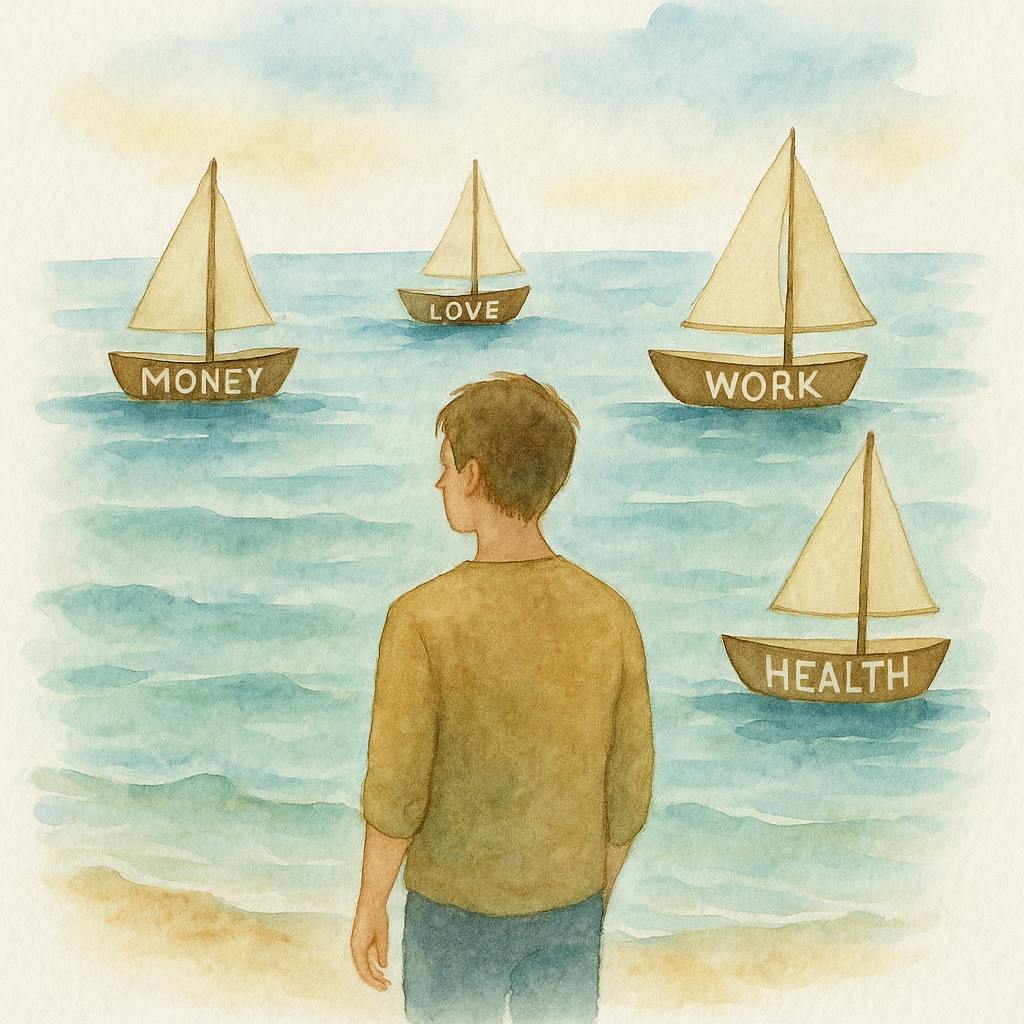
You Don't Need to Add More. You Need to Let Go

Most people trying to achieve something immediately start adding things to their life. More habits, more tools, more effort. That instinct feels right. It's also quietly keeping them stuck.
The Old Lady Was Right
An 80-something woman on Instagram stopped me mid-scroll today. She said something I can't shake: to achieve something in life, you first have to let go of something. Not add. Remove. She didn't say it like advice. She said it like a fact she'd lived — the kind of certainty that only comes from having been wrong a few times first.
I don't know if the video was AI-generated. But the idea? That one's real.
We Are Wired to Add
When we want to lose weight, we buy a gym membership. When we want more focus, we download another productivity app — on top of the 3 we already don't use. When we want better mornings, we stack a new routine onto an already broken day.
Adding feels like progress. It looks like discipline. But most of the time it's just noise layered on top of noise — and we wonder why nothing changes.
Subtraction Is the Real Lever
The most effective changes I've seen don't come from what you introduce. They come from what you stop doing. Every habit you remove reduces friction. Every thing you let go of clears space for something better to surface. The path doesn't open up because you built a new road. It opens up because you moved the junk blocking the one already there.
The 30-Day Letting Go Experiment
Here's a real test. Pick one goal — let's use weight loss because it's the most common battlefield for this mistake. For the next 30 days, don't add a single thing. No new diet. No new workout plan. No 5 AM alarm.
Just let go.
Let go of eating trash food. Let go of sitting all day without moving your body. That's it. Two things removed. Nothing added. Run the experiment and watch what happens — not just to your body, but to your energy and your relationship with willpower.
This Works Beyond Weight Loss
The project that isn't moving — is it actually stuck because you need more tools? Or is it three weekly meetings that keep draining the team before real work begins? The relationship that feels distant — does it need more grand gestures, or does it need less quiet criticism?
In most cases, the answer is subtraction. We just don't like looking there first.
The Harder Part
Here's what makes letting go difficult: adding costs money, time, and energy. Letting go costs identity.
The junk food, the endless scrolling, the over-committed schedule — these aren't just habits. They feel like part of who you are. Removing them means admitting they were quietly in the way the whole time. That's the real resistance. Not the behavior itself. The admission.
That's why an 80-year-old can say it so plainly. She's had enough time to stop protecting the things that were holding her back.