Your Daily Routine Is Your Destiny

I'm 46 years old. I've been running businesses for over two decades. I've reversed prediabetes, gone through burnout more than once, and discovered—pretty late, honestly—that my brain is wired differently than most people's. And the single most important thing I've learned through all of it has nothing to do with strategy or discipline or hustle.
It's this: your life is the sum of what you do every day.
Not what you plan to do. Not what you intend to do someday. What you actually do, today, repeated across weeks and months and years. That's your life. That's who you become.
One Change. That's It.
Here's where most people get it wrong—and I got it wrong for years.
You read a book about morning routines and suddenly you want to meditate, journal, exercise, drink lemon water, read for 30 minutes, and write your three most important tasks—all before 7 AM. Monday goes great. Tuesday is fine. By Wednesday you've hit snooze twice and the whole thing collapses.
I know this because I've done it. Multiple times. My ADHD brain loves the idea of a complete overhaul. It's exciting. It's novel. And it fails every single time.
What actually works? One thing. One small, almost embarrassingly small thing.
When my doctor told me I was prediabetic, I didn't redesign my entire life overnight. I started by cutting sugar from my coffee. That's it. One cup of black coffee instead of the sweetened version I'd been drinking for 20 years. That tiny shift led to the next one, then the next. Two years later, my HbA1c went from 6.1% to 5.5%. Prediabetes reversed.
Not because of a dramatic transformation. Because of one small change that I didn't quit after a week.
Your Life Is a Lab, Not an Exam
The self-improvement world has this toxic framing where you're always being graded. Hit your goals or you failed. Missed the gym? Failed. Ate badly? Failed. Didn't wake up at 5 AM? Failed.
That framing is garbage. And it's the fastest way to quit everything.
I've started thinking about routine changes as experiments instead. I run my life like a lab. Try something for two weeks. If it makes me miserable, that's useful data—I stop. If it clicks, I keep it. No guilt either way.
I experimented with working from coffee shops. Turns out my creative brain activates differently there—I learn better, I think more freely. At my office desk with the external monitor, I solve complex problems. On the couch with my laptop, I clear my inbox. Different environment, different Cem. I didn't know any of this until I experimented.
Some experiments fail. I tried waking up at 5 AM for a month. Hated every second of it. My body doesn't want to function before 7. That's not failure—that's data about how I actually work. I stopped fighting it and started designing around it.
The point isn't to find the "perfect" routine. It's to find YOUR routine, through trial and error, without beating yourself up along the way.
If You Don't Enjoy It, Stop
This one took me years to accept.
If the new habit feels like punishment, it won't last. Period. I don't care how many studies say it's good for you. If you dread it, you'll quit—and then you'll feel worse than before you started because now you've added guilt to the equation.
My gym sessions stick because I genuinely enjoy the feeling of lifting heavy things. The fighter version of me comes alive in that environment. But running on a treadmill? I've tried to make myself love it at least a dozen times. It never happened. So I stopped pretending and found other ways to get cardio that I actually look forward to.
Same with journaling. I don't force myself to write three pages of stream-of-consciousness every morning. Some days it's two sentences. Some days it's just writing down what's on my mind to get it out of my head. The practice sticks because it feels clarifying, not because I'm following someone else's prescription.
Find the version of each habit that you actually enjoy. Not the version Instagram tells you is optimal. YOUR version. The one you'd do even on a bad day.
You're Not Broken. You Never Were.
Here's the thing nobody in the self-improvement space wants to admit: you don't need fixing.
I spent years approaching change from a place of "I'm not good enough yet." Not fit enough, not productive enough, not disciplined enough. That mindset poisons everything. It turns every new habit into evidence that the current you is somehow deficient.
I don't add things to my routine because I'm broken. I add them because I'm curious about what's possible when I'm already whole and I keep stacking small good things on top. There's a massive difference between those two motivations—and your brain knows which one you're operating from.
The version of me that meditates for a few minutes each morning isn't more worthy than the version that doesn't. But he's calmer. He makes better decisions. He's more present when his kids are talking to him instead of mentally running through tomorrow's to-do list. Those qualities ripple outward into everything.
Change because you want to explore your potential. Change because you want to show up better for the people you love. But don't change because you think who you are right now isn't enough. You are. You always were.
Clear the Noise
A cluttered desk makes my brain feel like it's screaming. I figured this out by accident—one day I cleaned my entire workspace before starting work, and the difference in focus was so dramatic I thought something was wrong with me.
Nothing was wrong. My brain just responds to its environment more than I realized.
I've built a simple habit around this: once a week, fifteen minutes, I clear everything. My desk, my inbox, my browser tabs, the random notes piling up on my phone. I write down anything that's been circling in my head so it stops circling. It's not a deep cleaning—it's a mental reset. And it costs almost nothing in terms of time.
Physical clutter is a slow tax on your attention. Mental clutter is worse because you can't see it piling up. Both drain energy you could spend on things that actually matter to you.
Protect Your Silence
I stopped watching news entirely a few years ago. People warned me I'd be uninformed and out of touch. The opposite happened. I became more informed about things that actually affect my life because I stopped letting algorithms decide what deserves my attention.
But it goes beyond news. Most of us fill every quiet moment. Podcasts during walks. Phone in hand during every wait. Background noise at all times. We're terrified of silence.
I've started protecting small windows of silence in my day. Coffee in the morning without my phone. A short walk without headphones. Sitting for a few minutes doing literally nothing.
These moments feel uncomfortable at first—especially for a brain like mine that craves stimulation. But they're where my clearest thinking happens. The ideas that actually matter don't arrive during input. They arrive during silence, when my mind finally has room to process everything it's been absorbing.
You don't need a meditation retreat. You need ten minutes of quiet. Guard them.
Who Do You Become?
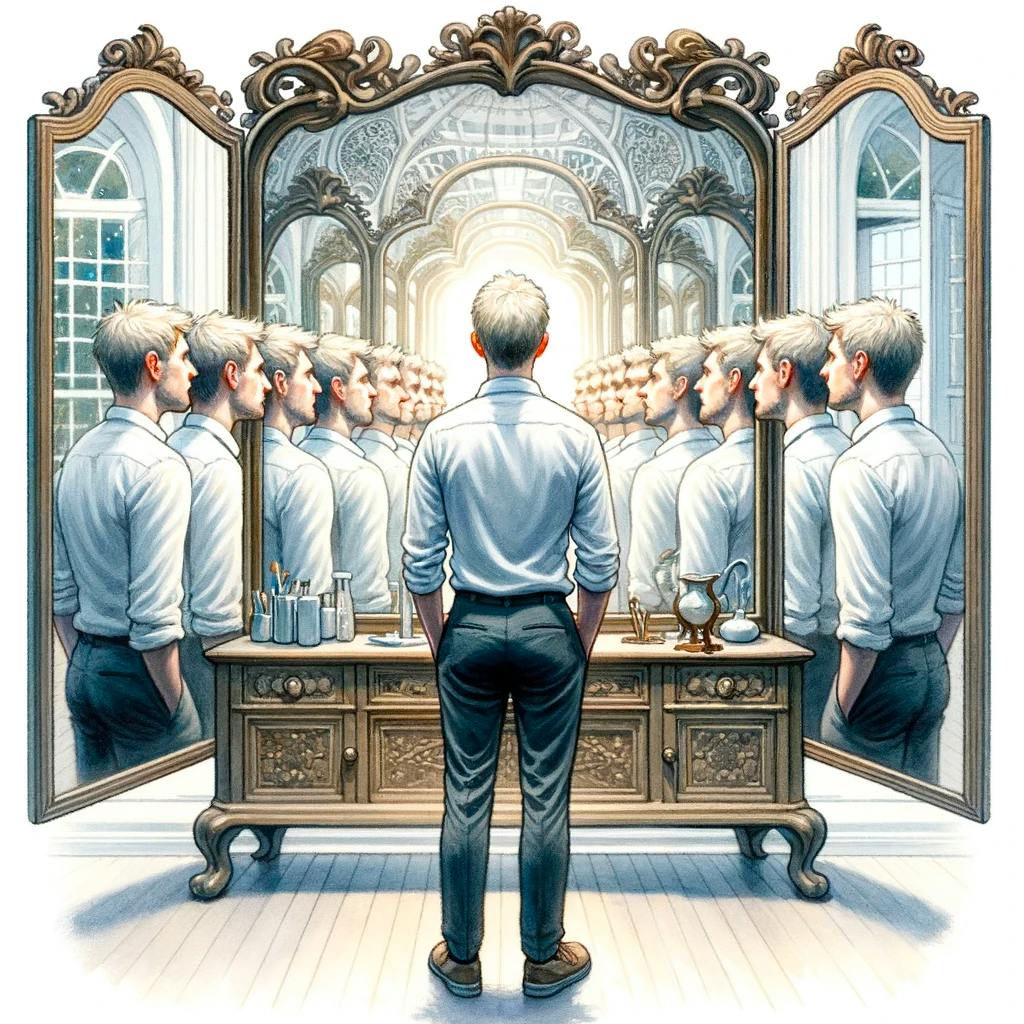
I think about this a lot. If you string together 365 days of small, intentional actions—a few minutes of stillness, a clear workspace, one important task finished before lunch, a body that moves, a mind that's given space to think—who are you a year from now?
Not a different person. A more fully realized version of the person you already are.
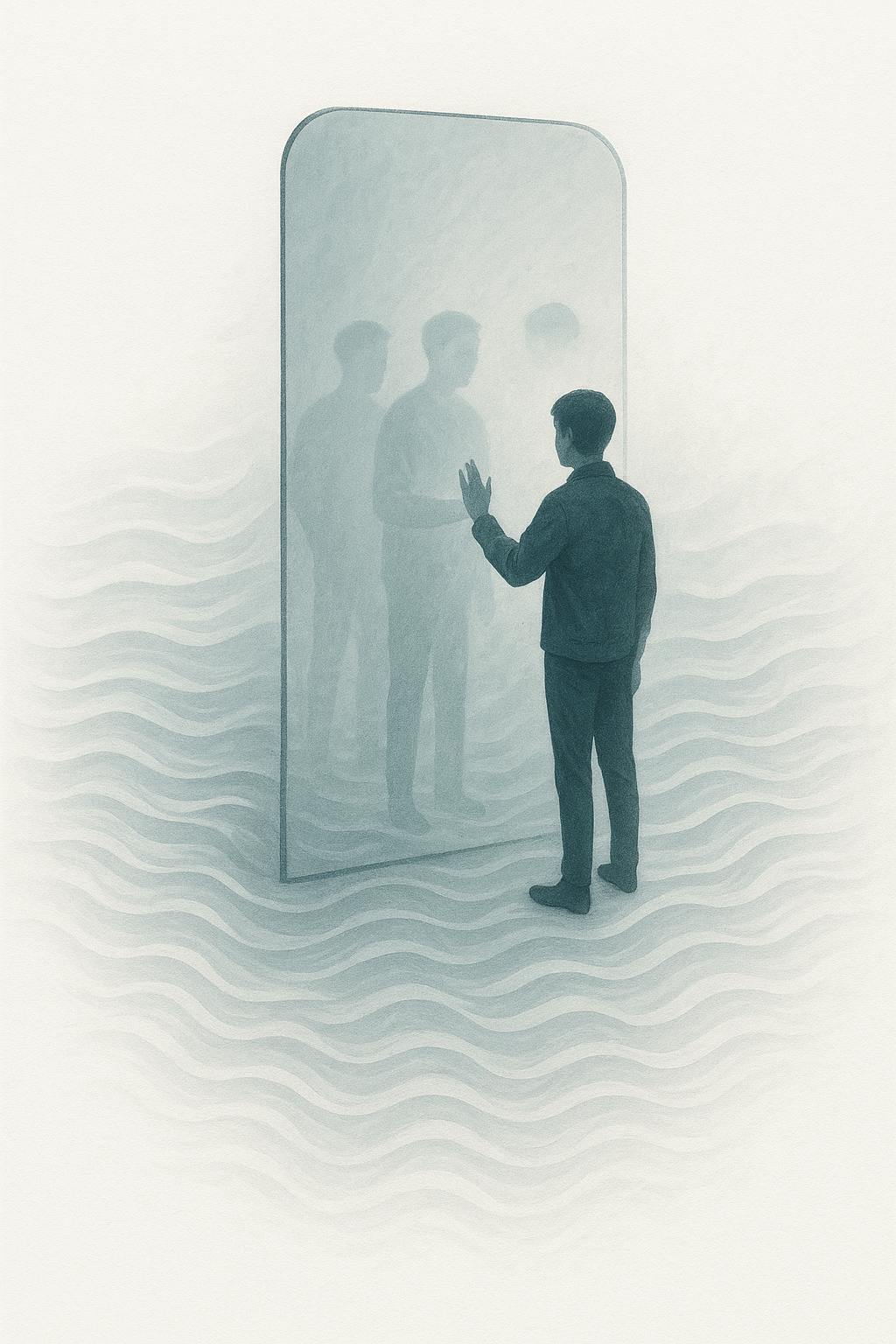
I've seen this in my own life. The Cem who reversed prediabetes didn't become someone new. He became the version of himself who took his health seriously—one small decision at a time. The Cem who learned to work with his ADHD instead of fighting it didn't fix a broken brain. He finally understood how his brain actually works and designed his days around it.
None of this required an overhaul. None of it required suffering. It just required showing up, one small thing at a time, and being honest about what worked and what didn't.
That's all transformation has ever been.
Pick one thing. Just one. Start today.