I Built a Multiplayer Game Yesterday. I Wrote Zero Code
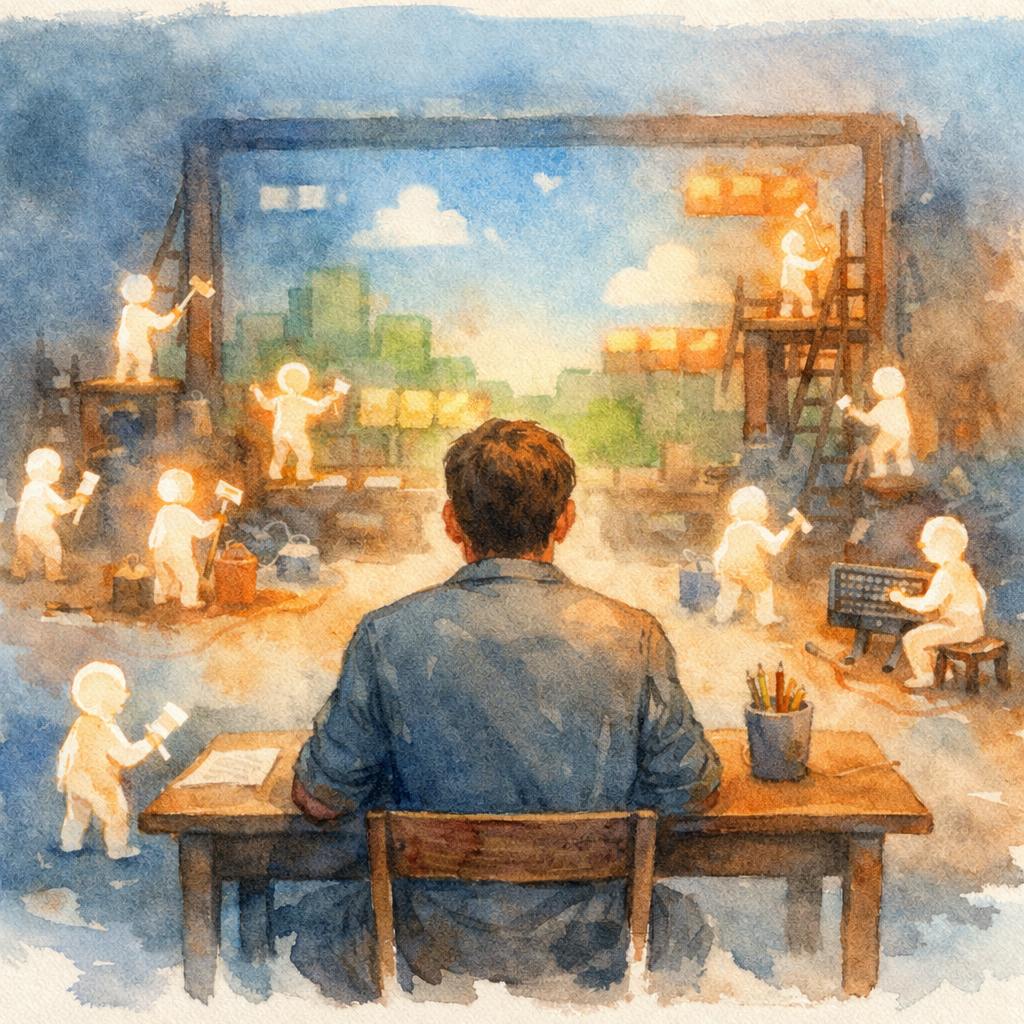
AI is no longer just a tool — it's becoming the worker. And that should make you stop and actually think. Not the celebratory kind of thinking you see on LinkedIn. The uncomfortable kind.
What Happened in Two Hours
Yesterday I built a multiplayer online Tetris game. Start to finish. Live on the internet, with a real domain, a running server, real players connecting to it.
I wrote zero lines of code. I didn't name the product. I didn't pick the server. Didn't register the domain. My team of AI agents did every single one of those things. They found a name — DropDuel.com — registered it, spun up the infrastructure, built the game, deployed it.
Two hours. Done.
I made coffee while it happened.
I Didn't Direct. I Watched.
Here's what most people get wrong about AI right now: they think of it as a tool. You pick it up, you use it, you put it down. You stay in control the whole time. That's the comfortable version of this story.
That's not what happened yesterday.
I gave the AI team a goal. Not a list of instructions — a goal. Then I stepped back. The agents coordinated with each other, made decisions I didn't approve, and produced a finished, working product without me in the middle of every step. My role wasn't operator. It was closer to observer.
That's a fundamentally different thing. And I don't think most people have sat with that difference long enough.
The Honest Feeling
I'll tell you what I felt, because I think it matters more than any hot take.
First: impressed. Genuinely. What happened in those two hours was remarkable and I'm not going to pretend otherwise.
Then: something else. Something harder to name.
I'm getting lazier. I think less now. I reach for AI before I reach for my own brain — on problems I used to solve myself, with skills I spent 20 years building. Those muscles are getting called on less and less. And unlike physical muscles, I'm not sure I'd notice them atrophying until they're already gone.
This isn't a complaint. I want to be clear about that. It's an observation. And I think it deserves to be named directly instead of buried under enthusiasm about how incredible the technology is.
The Next Goal: AI as a Second Brain
I'm not trying to slow this down. I want to go further.
My next step is building AI into a genuine second brain — not just a code assistant or a writing helper, but a real sidekick. Something that handles cognition, planning, and execution at my direction. I want to stop being the person who does things and become the person who decides what gets done.
That sounds cleaner than it is. Directing well is actually harder than doing well. Most people who've tried to manage high-performing teams know this. You have to think more clearly about outcomes, not less. You have to communicate better, not worse. The workload doesn't shrink — it shifts.
I'm not entirely sure I'm ready for that shift. But I'm paying attention to it.
The Real Goal: Replacing Myself
The end state I'm working toward — and I say this without drama — is replacing myself in my own business.
Not stepping back and handing things to a human team. Replacing myself with systems and AI agents that run day-to-day operations without me in the loop for routine decisions. Free up whatever's left of my attention for the things I actually need to be present for: vision, relationships, the judgment calls that require real human context.
This isn't a future fantasy I'm describing. Yesterday showed me it's already starting.
The gap between "I need to write this code" and "I need to decide what gets built" is closing faster than I expected. I built a fully deployed multiplayer game without writing a single line. The step after that — building a business function without making a single decision — doesn't feel as far away as it did last week.
What This Actually Means
The world is changing faster than most people are willing to say out loud.
A multiplayer game. Fully deployed. From nothing. Under two hours. Zero human code. That happened yesterday afternoon at my desk — not in a research lab, not at a billion-dollar company with 200 engineers. At my desk, in Istanbul, on a Thursday.
I don't know exactly where this goes. Nobody does, honestly. But I'm fairly confident about one thing: the people who fall behind will be the ones still treating AI as a tool they occasionally reach for. The people who move forward will be the ones who learn to build systems where AI is the worker and they are the director.
That's the bet I'm making.
I just need to make sure I don't forget how to think while I'm making it.