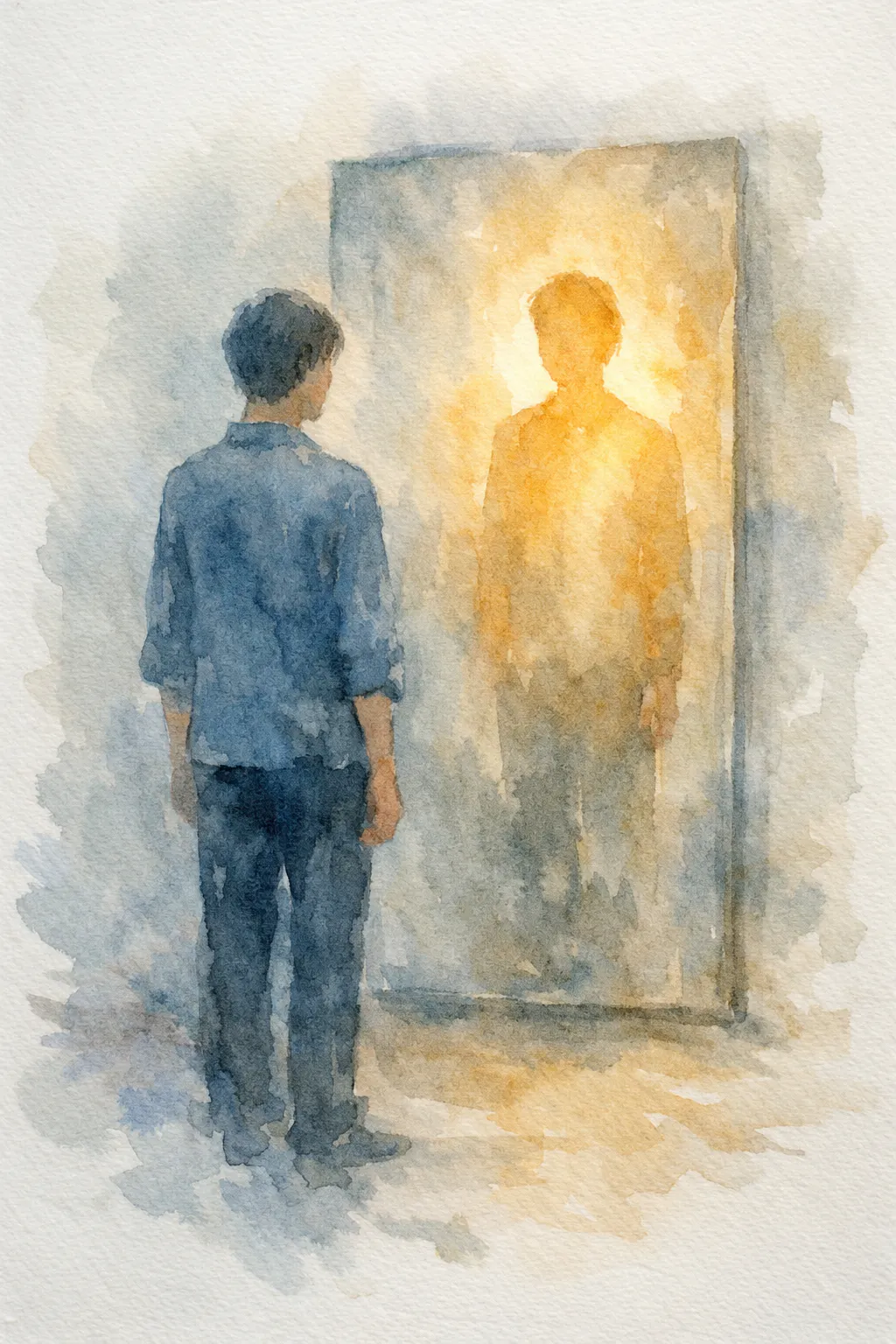
The Brain Obeys a Command, and Searches for an Answer

I read a phrase in Turkish a few months ago: "Beyin hükme itaat eder, soruya cevap arar." Roughly, in English: the brain obeys a command, and it searches for an answer to a question. I honestly don't remember where I read it. Some feed, some book, some half-read article at midnight. Doesn't matter. It clicked, and it stayed with me, because it named something I had felt for years and never put into words.
This post is for future me. Read it again on a rainy day.
Where This Idea Came From
I can't point you to a source, a study, or an author, so I won't pretend to. I read it somewhere, it landed, and I never went back to find where it came from. What I can tell you is why it stuck: it explained a pattern I kept living through without understanding it. Every time I got tired, or stretched too thin, or just plain fed up, my inner voice flipped into a kind of autopilot. "I can't do it." "It's not possible." Flat statements, said like facts. This phrase gave that pattern a name, and a way out.
Orders Shut the Search Down
Here's the part that changed how I talk to myself. "I can't do it" isn't a fact. It's an order. Same with "it's not possible." Your brain doesn't check whether the order is true before it follows it, it just follows it. Say "I can't," and the search for a way stops right there, mid-sentence, like someone pulled the plug. No debate, no second opinion. The order lands, and the looking stops.
The Mistake Is Treating It as Harmless
For a long time I treated this kind of talk as harmless. Venting. Letting off steam after a bad day, nothing more. That's the mistake. Every sentence you say to yourself, even a tired, throwaway complaint, works as an instruction, and your brain carries it out without asking permission. Let it pass unnoticed and it repeats. Notice it, and you get a choice you didn't know you had.
Turn the Order Into a Question
So here's what I try to do now, when I catch myself mid-spiral. Stop. Step in before the sentence finishes. Then swap the order for a question, because your brain loves questions just as much as it loves orders, maybe more.
Instead of "I can't do it," ask: "How can I do it?" Instead of "It's not possible," ask: "There must be a way, what could it be?"
A question doesn't close the door the way an order does. It sends your brain out looking for an answer, and it doesn't come back empty-handed without at least trying first.
Easy in the Sun, Hard in the Rain
On a good day, when things are going your way and you feel strong, this is easy to say and even easier to believe. The sun is out. Of course you can rephrase a sentence, that's nothing.
On a rainy day it's a different story. When you're worn down and the negative talk shows up uninvited, catching it takes real effort. Swapping it takes a kind of courage you don't need when everything's fine. It takes skill, the skill of noticing your own voice before it finishes a sentence. And it takes muscle, the muscle you only build by doing this again and again, on exactly the days you least feel like it.
Future me: you'll forget this on the hard days. That's exactly when you need it most. Stop. Step in. Ask the question instead.