Stillness Is Where Creativity Lives
Creativity isn't a talent. It's a state — and modern life is specifically, almost perfectly, engineered to prevent you from ever reaching it.
You Already Have the Creativity — You Just Can't Access It
Every person has more creative capacity than they'll ever use. I genuinely believe this. The bottleneck isn't ability. It's space — or rather, the total absence of it. When every hour is packed with tasks, messages, decisions, and noise, the brain has nowhere to breathe. Ideas don't get blocked exactly. They just never get the chance to surface. They're buried under the weight of being perpetually busy.
Thinking Is the Source
Here's what I've noticed, over and over again: creativity doesn't come from inspiration. It comes from thinking. Real thinking. Uninterrupted, unhurried, directionless thinking — the kind that most people haven't had in years. When you actually stop moving long enough to let your mind wander, something shifts. New questions appear. Connections form between things you didn't realize were connected. The raw material was always there. You just needed enough stillness to see it.
Routines Are Valuable — Until They Are a Cage
I'm not anti-routine. Routines are genuinely useful — they reduce friction, create consistency, and keep you moving on the days when motivation is nowhere to be found. But there's a trap inside them that's easy to miss. If you never break your routine, it stops being a support structure and starts being a loop. Same inputs, same patterns, same outputs. Routines optimize the life you already have. They don't generate the one you haven't imagined yet.
A Changed Environment Changes Your Brain
You don't need two weeks off. You don't need a retreat. Even a few hours in a different place is enough to interrupt the pattern.
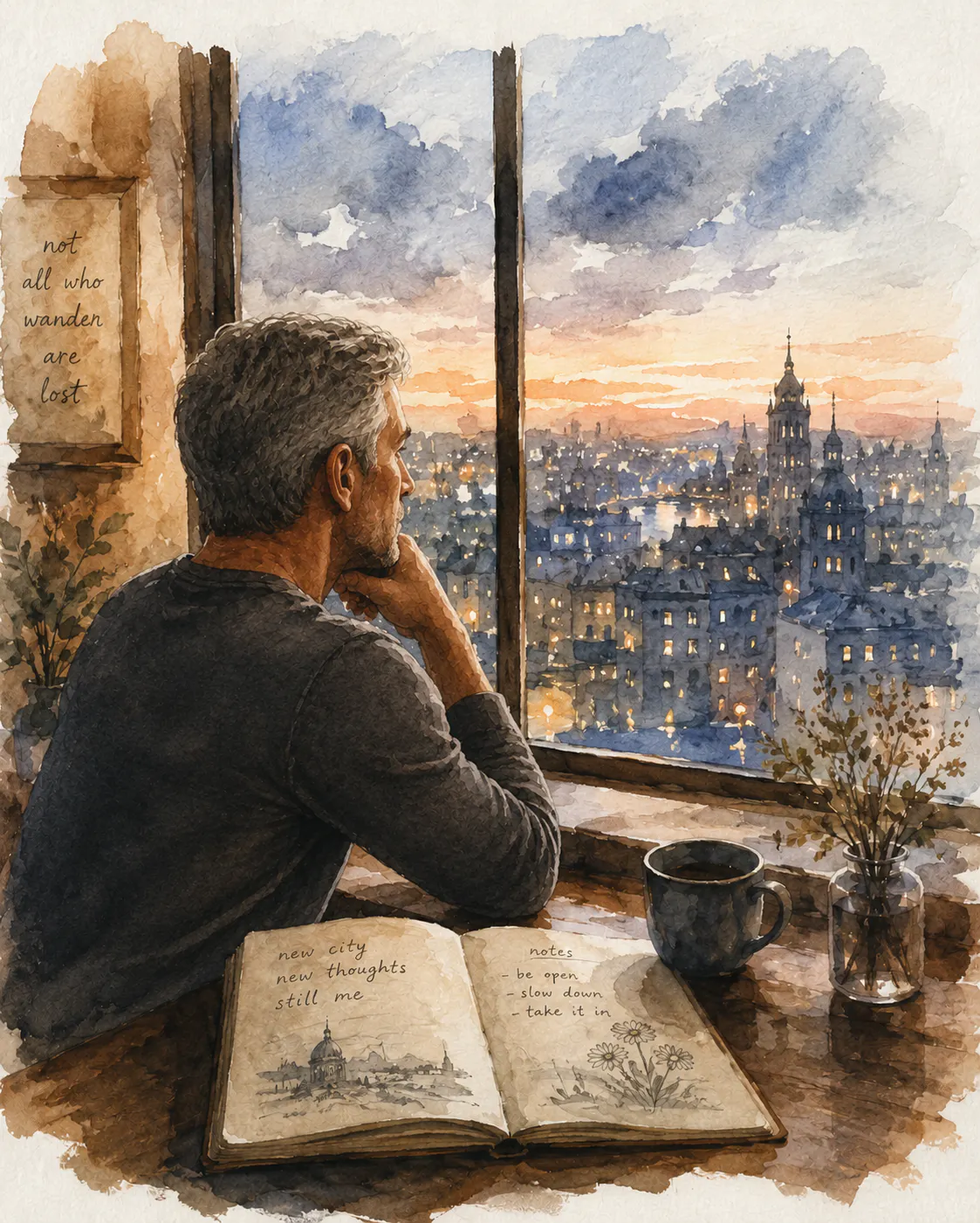
A new city, a different café, a walk somewhere you've never been. The brain responds to novelty in ways that routine never triggers — it pays sharper attention, makes different associations, notices things it would normally filter out. I've experienced this enough times now that I can't dismiss it as coincidence. You come back to the same problems you left, and somehow you see them differently. Not because anything changed. Because you did.
New Ideas Come From Changed Contexts
Some of the most significant decisions I've made — new product directions, business pivots, personal choices I'd been circling for months — didn't come from sitting at my desk. They came from trains. Airports. Afternoons in cities I don't usually live in.
There's something about distance from your daily context that lets you actually see it. When you're inside the routine, you can't get perspective on it. Step outside — even briefly — and the fog lifts. A software idea that felt stuck for weeks suddenly has an obvious next move. A decision that felt impossible at home resolves itself somewhere over the Channel.
It's not that travel is magical. It's that stillness and novelty together unlock a kind of thinking that busyness doesn't allow.
Schedule the Pause Deliberately
Don't wait until you're burned out to change your environment. By then it's damage control, not creative input.
Build the pause in before you need it. A regular trip. A morning with no agenda — not one task, not one Slack message, nothing scheduled. A half-day in a different space, just to think. These aren't luxuries or rewards for finishing everything. They're inputs. They're part of the work.
The person who never stops isn't more productive. They're less creative, slower to solve real problems, and more trapped inside patterns they can't even see anymore. Stillness isn't the opposite of productivity. It's where the best of it comes from.