Stop Doing Hard Work in Places You Love
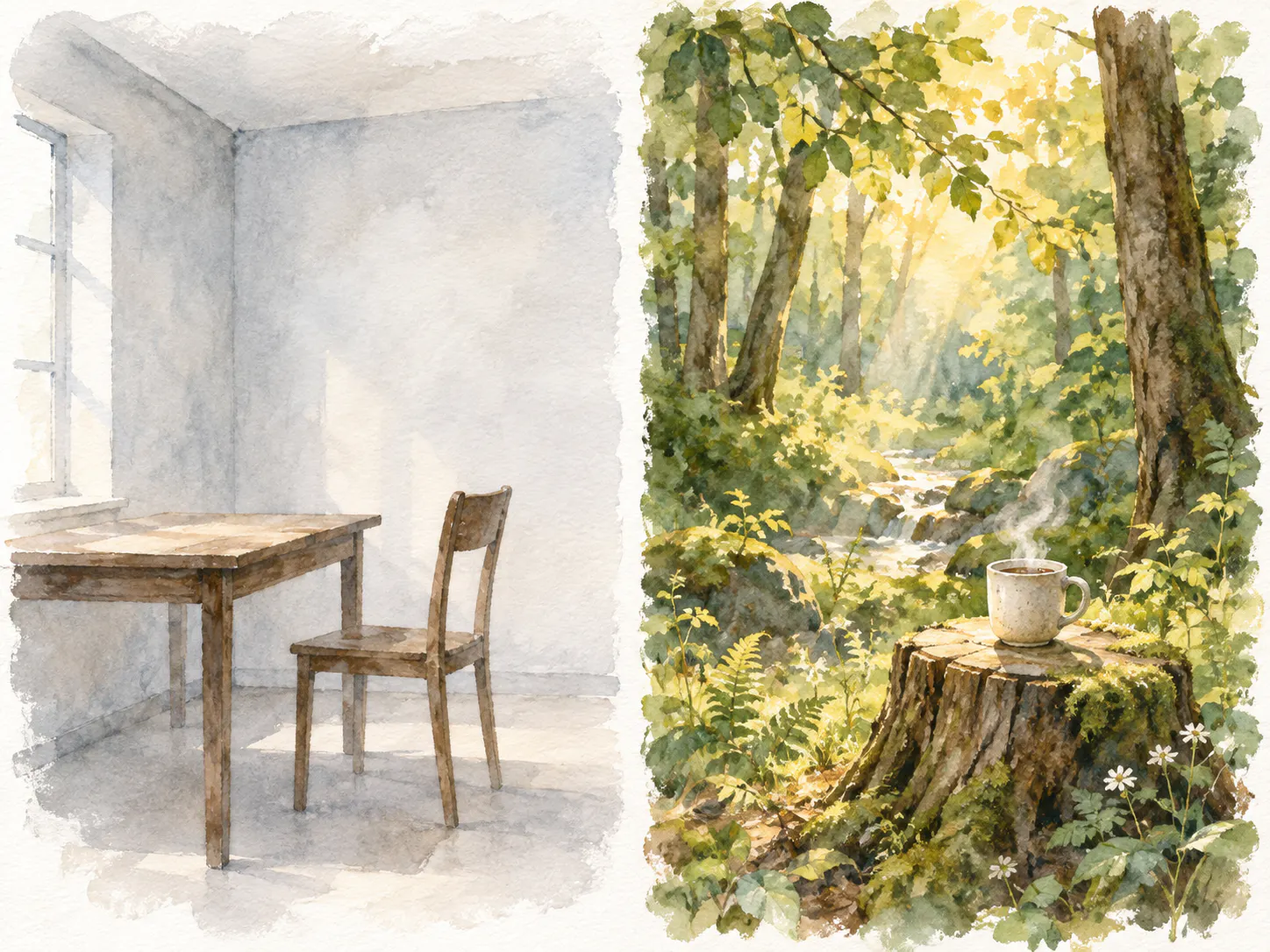
I stopped trying to do hard work in beautiful places. For a long time I dragged my laptop into the forest to do the hard stuff, and it never worked: I got less done there than in a bare room with only a desk and a chair.
The Forest Story, Told Straight
I love the forest. I walk in it, I sit in it, I sip coffee in it. So I assumed it was the perfect place to work too.
I brought my laptop out there more than once, sat down under the trees, and tried to push through something hard: a plan, a proposal, a real piece of thinking. Every time, I got almost nothing done. I'd notice the light, the quiet, the coffee going cold, and an hour would pass with one paragraph written.
For a while I thought that meant I needed to be uncomfortable to do hard work. I was wrong about that, and it took me some time to see why.
It Was Never About Comfort
The bare room with the desk and the chair isn't uncomfortable. It's boring. That's the whole point.
Nothing in that room can beat the work for my attention. No view, no coffee smell, no breeze, nothing competing with the task in front of me. So the work wins, not because I'm tougher in there, but because it has no rival.
The forest has a rival. The rival is the forest itself.
The Forest Fails Because It Is the Reward
Here's the mistake I kept making. I treated the forest as neutral scenery for the work, but it isn't neutral. It's the payoff I'd normally get after finishing something hard.
Sit in the reward while you're supposed to be earning it, and your brain takes the payoff early. It already has what the hard part was supposed to earn it, so it stops pushing on the actual task.
The sofa works the same way. It's comfortable enough to be its own reward, and that's exactly why hard work on the sofa fails for the same reason it fails in the forest.
Hard Work Needs a Room With Nothing Else Going On
So for anything hard, I now pick the most boring room available. No window with a view. No music pulling at me. Just a desk, a chair, and the task.
I stop trying to make the space nice. I stop trying to make myself comfortable before I start. The point of that room is that it offers me nothing else, so my attention has nowhere else to go.
Boring isn't a punishment here. It's the feature that makes the hard work possible at all.
Routine Work Wants the Opposite Room
Routine tasks are a different problem. Answering emails, clearing small admin, reviewing something I've already thought through: none of that needs a boring room, because none of it needs my full attention to begin with.
For that kind of work, I go to the sofa. I go back to the forest. I do it while traveling. The task itself is dull, so I let the place supply the pleasure the task can't. The pleasure comes from being outside, or comfortable, or moving, not from the work itself, and that's exactly what makes a dull task tolerable long enough to finish it.
Same forest, same sofa, completely different outcome, because the type of work changed underneath me.
Creative Work Wants a Deadline I Didn't Set
Traveling is where I feel most creative, airports especially. It took me a while to understand why.
An airport gives me constant new input: people, signs, delays, gates changing, none of it something I control. It gives me a hard deadline I didn't set myself: boarding. And it takes away every other option, because I can't start a new project there, I can't fix a server, I can't take a work call standing at a gate.
That combination, new input plus an outside deadline plus nothing else I'm allowed to do, is what creative thinking actually needs from a place. I didn't design it on purpose. I just kept noticing that my best ideas showed up there and nowhere else.
The Feeling Was Never the Guide
I started out thinking the rule was about comfort and discomfort: uncomfortable when doing the hard work, comfortable when doing the routine work. That framing is backwards.
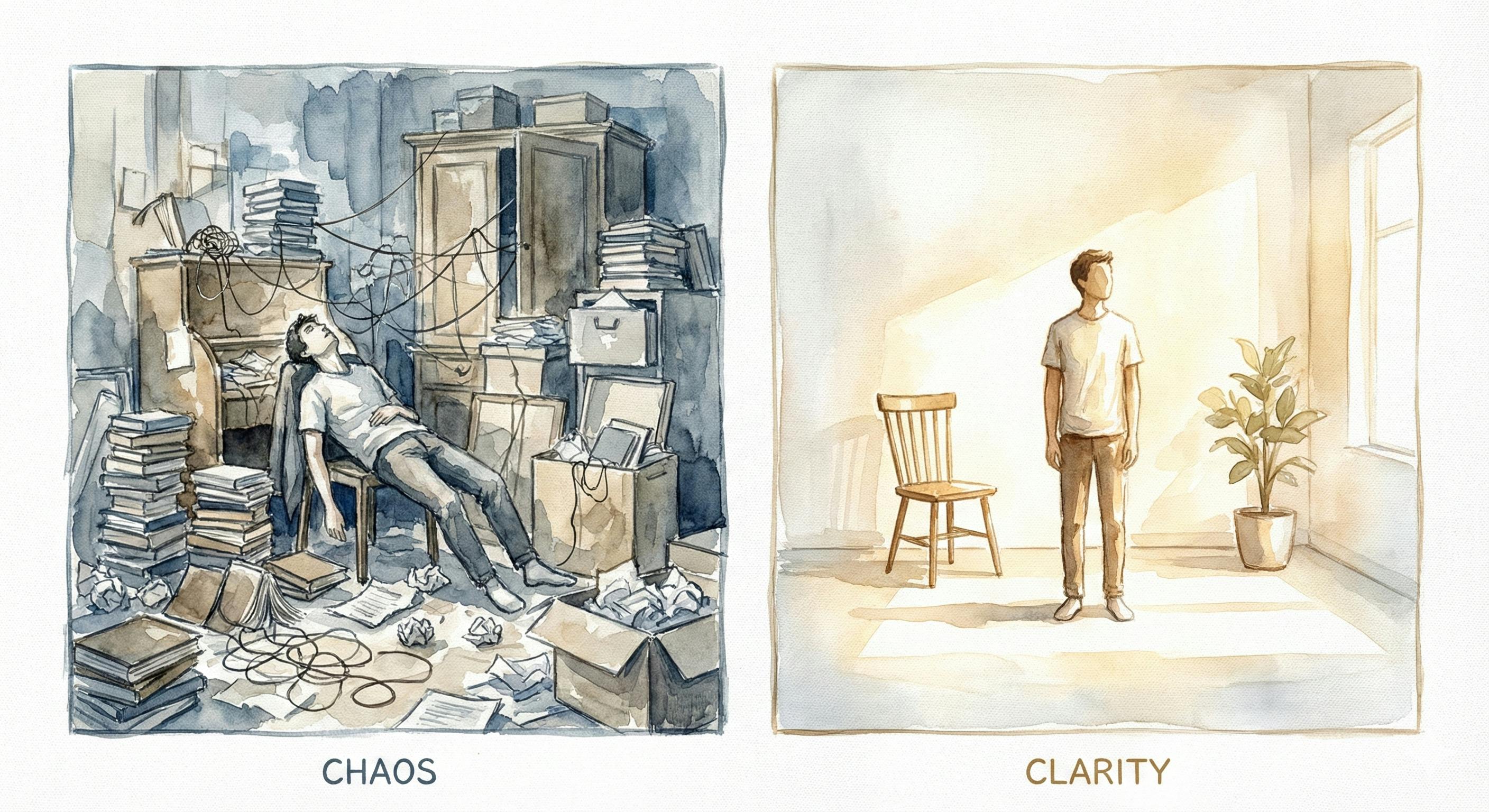
The feeling I get in a room is downstream of what else that room offers me. A boring room feels flat because it has nothing to offer, and that's exactly why the hard work gets done there. A forest feels good because it's already paying me before I've earned it, and that's exactly why the hard work doesn't get done there.
So I stopped asking how a place makes me feel before I work in it. Now I ask what else that place is offering me, and whether that competes with the task or serves it.
Match the room to what the task can't supply on its own. Stop trying to do hard work in the places you love. Save those places for the work that actually needs them.