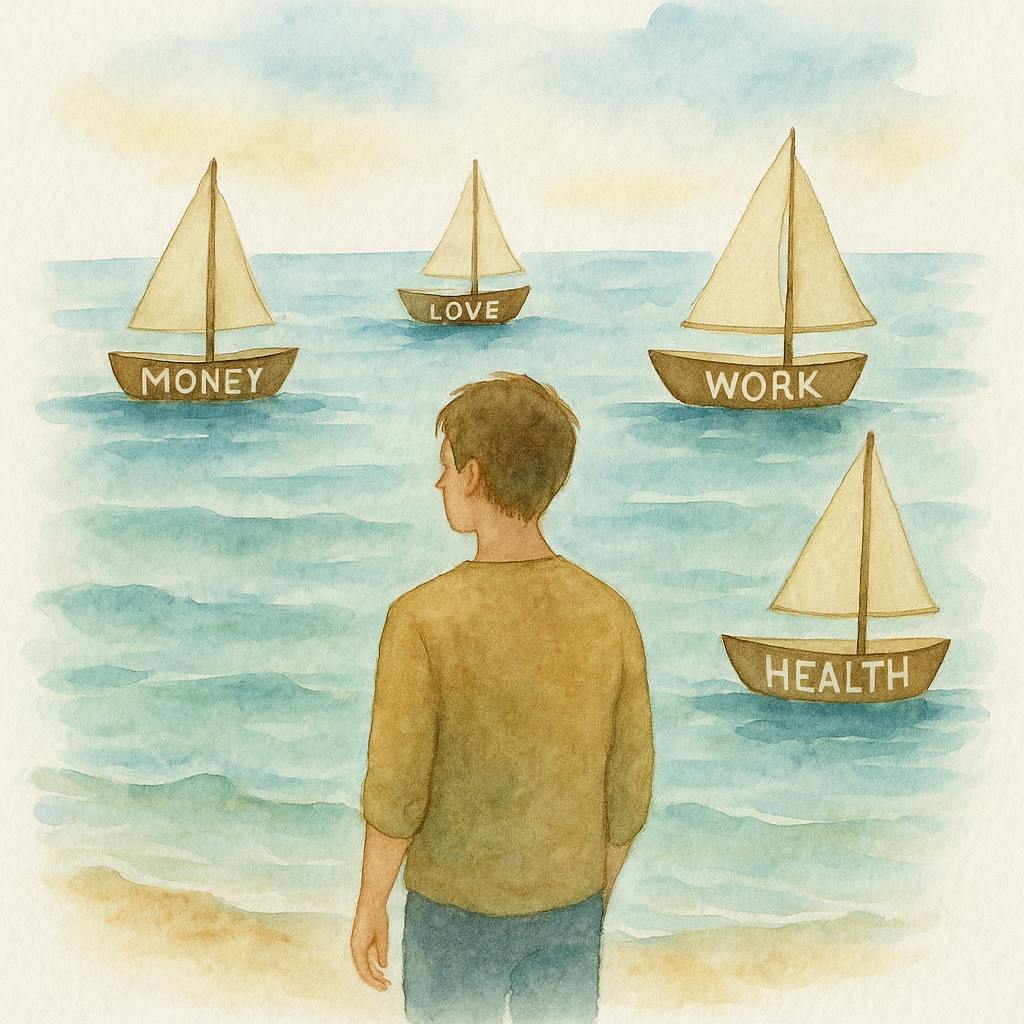
The Distribution Problem Is the Only Problem

AI didn't make building hard. It made building trivial. What it did not do, what it actually made worse, is distribution.
I Counted My Bookmarks
Last week I did something mildly embarrassing. I sat down and went through all 198 Twitter bookmarks I'd saved over the past eleven months. Tagged every single one. Made a little spreadsheet.
The pattern that came out of it was hard to look at.
58 bookmarks: Claude Code skills, setups, plugins, custom commands. Another 27 about other AI coding workflows and agent frameworks. Combined, more than 40% of everything I saved over nearly a year was about one thing. How to build faster.
Then I counted the other pile. 26 bookmarks on SaaS marketing and growth playbooks. 16 on SEO and distribution. 14 "$0 to $X MRR" stories I'd read and filed away. 4 on Reddit marketing.
So: about two-fifths of what I save is about shipping product. About a third is about getting users.
I'm a builder who keeps studying building. That's the confession right there.
The Signal I Couldn't Ignore
One specific bookmark captures the whole tension. Greg Isenberg wrote that 200,000+ new vibe-coding projects get created every day, yet almost none of them get customers.
I bookmarked it. Of course I did.
That sentence names the problem plainly. The build side is essentially solved. There are more products being shipped right now than at any other point in the history of software. The distribution side? Not solved at all. The noise is louder, attention is more scattered, and the feed moves faster than it ever has.
More supply. Same amount of human attention to go around. The math on that doesn't get better over time.
Nine Bookmarks, Same Topic
Here's the detail that made me actually sit with this.
The single most-bookmarked author across all 198 saves is Natia Kourdadze. Nine bookmarks. Every one of them is about the same topic: how to find your first 100 users.
I've saved her content nine separate times. Nine occasions where I read something she wrote, thought "yes, this is exactly it," hit the bookmark button, and moved on with my day.
Nine times. I still don't have my first 100 users on DemoPolish.
That's not a Natia problem. That's a me problem. I know what matters. I'm just not doing it.
What AI Actually Changed
Here's the reframe I keep returning to.
The bar to ship something is now $20 of API credits and a free weekend. A few weeks ago I built a fully deployed multiplayer game without writing a single line of code. Start to finish, under two hours. What used to require a co-founder, an engineer, and three months can now be done by one person on a Saturday afternoon.
That part is genuinely remarkable and I'm not going to downplay it.
But the bar to be noticed has never been higher. Every person who used to be stuck with "I can't build it" is now stuck with "I built it and nobody came." The bottleneck didn't disappear. It moved. And most builders, myself included, haven't fully recalibrated where they're pointing their energy.
We keep optimizing the part that's already easy.
The Compounding Gap
I run DemoPolish, Octeth, Sendloop, and a consulting practice. I've felt this tension physically, not just theoretically. There are weeks where I spend real, focused hours getting sharper on Claude Code workflows and zero hours doing anything that puts my products in front of new people.
What that tradeoff actually looks like over time: coding skills get you done faster on individual tasks. A working distribution channel, a growing audience, a content habit that earns trust and compounds over months, those are different in kind. Each piece of work makes the next one more effective. The return on time is not even close.
When I look at 198 bookmarks, I see someone who understands this on paper and keeps investing in the wrong side anyway. Because learning a new tool feels like forward motion. It's immediately satisfying. There's a clear before and after. Distribution work is slower, harder to measure, and the feedback loops are long.
That gap, between what feels productive and what is productive, is where I think most builders quietly lose.
The Reframe
For the next year, every hour I spend learning a new coding trick is an hour I didn't spend on distribution. That's just arithmetic. Both are finite. The bottleneck isn't the build anymore.
So the question isn't "how do I ship faster?" The question is: how does the thing I already shipped reach more people?
I'm not deleting my Claude Code bookmarks. I'm not going full monk mode on content marketing. I'm just trying to be honest about what my own behavior reveals when I look at it clearly, 198 saves over eleven months, and adjust what I actually practice, not just what I tell myself I believe.
The product isn't the problem. It never was.